Highly commended
Rare Network Innovation Exchange: Building a National Platform for Rare Disease Service Transformation
by Intent Health for Alexion, AstraZeneca Rare Disease
Summary of work
Rare disease services in England are world-leading, yet fragmented. Clinical leaders often operate in isolation, with limited opportunities to share best practice, build leadership capability, or design more sustainable models of care.
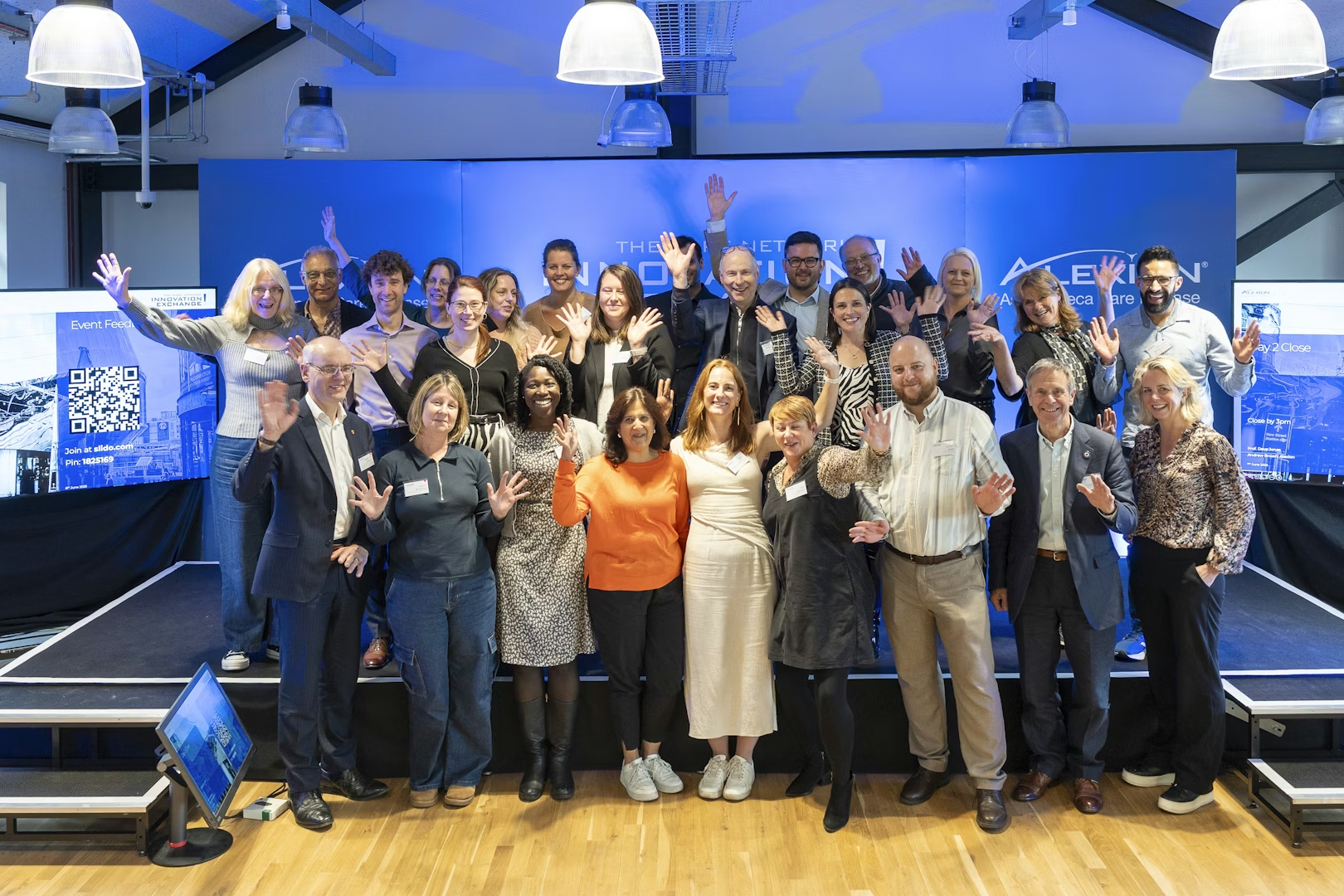
The Rare Network Innovation Exchange (RNIE) was created to address this systemic gap. Rather than a traditional educational meeting, RNIE was designed as a national platform for capability-building and collaboration, bringing together clinical leaders, patient advocates, and system stakeholders to co-create solutions to shared challenges.
Delivered as a two-day immersive event, RNIE combined strategic insight, real-world case studies, and interactive workshops to enable immediate application in practice. Crucially, it was conceived not as a one-off meeting, but as the foundation for an ongoing network to support continuous learning and service improvement.
The impact extended far beyond the event itself. Delegates reported implementing changes within their services, while sustained engagement saw 100% of attendees remain active in the network. A follow-on webinar attracted 114 registrants, and the Steering Group expanded from 3 to 8 members, with representation across major centres of excellence.
RNIE demonstrates how education, when designed as a platform rather than an event, can drive behaviour change, collaboration, and system-level transformation in rare disease care.
Judges’ comments
The judges were very impressed by this entry, saying that its strategy and intent really made it stand out. Working in the rare disease space, the meeting was very patient-centric and it brought the networks together. It was an excellent programme, with a very strong strategy and outcomes. It was a great example of building a programme that had a tangible impact and keeping the momentum going. It really understood the challenges of rare diseases and trying to come together, with outcomes that are not product related, but rather empower people to make changes.