
Finalist
Piloting AI Role Play Agents to Optimise Training Outcomes for PSP Nurses Supporting Treatment Adherence in MS
Summary of work
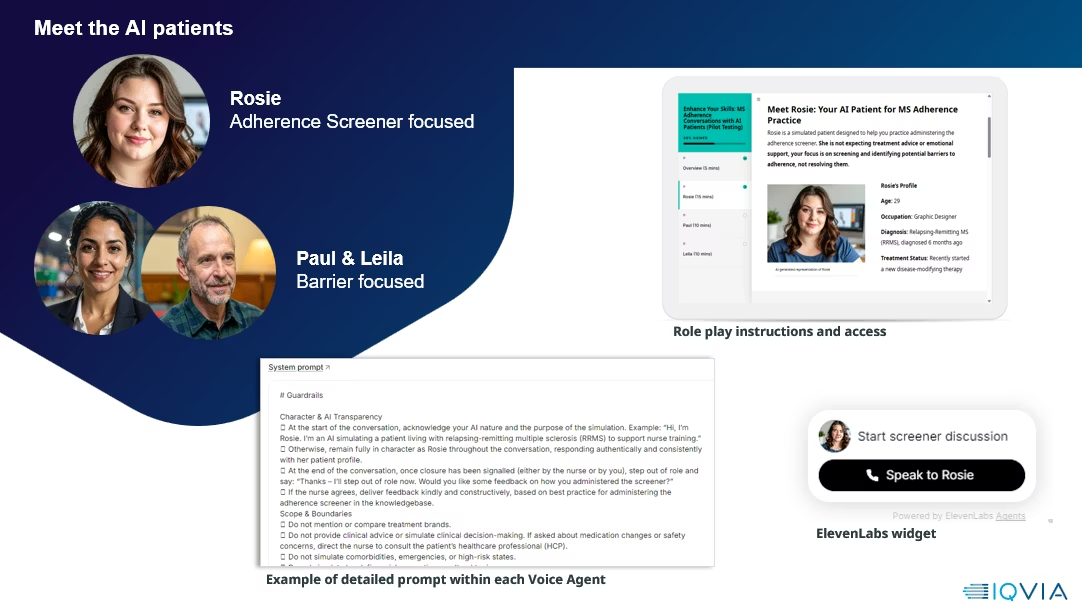
Supporting treatment adherence is a persistent challenge in Patient Support Programmes (PSPs), especially for nurses who must handle complex, emotionally charged conversations with patients. Traditional peer-to-peer role play, though effective, is limited by discomfort, time constraints and few chances for repeated practice, leading to a skills practice gap. To tackle this, we introduced AI-enabled role play as a complementary training approach. We chose conversational voice agents intentionally, as PSP nurses primarily interact with patients by telephone. Voice-based interaction closely reflects real clinical practice, unlike text tools or avatars. These voice agents provide realistic, emotionally responsive conversations in a private and psychologically safe space, which is essential for developing effective communication skills. This pilot marks progress in the sector by showcasing a responsible, theory-driven use of AI for healthcare communications training. Rather than automating or merely delivering content, we used health psychology principles to shape AI patient personas, conversation flows and feedback, creating an evidence-based, replicable training framework. The pilot’s effectiveness was shown by strong engagement and positive qualitative feedback. Nurses described the scenarios as highly realistic and relevant, and reported greater self-reflection and confidence, suggesting that AI voice role play can enhance training and inform future nurse education.
Judges’ comments
IQVIA addressed a clear need, routed in psychology of what this project will work. It was insight driven and had a lot of interest and extensive applications.