Winner
Taking the Road Less Travelled - How to Innovate with Patients Not for Them
Summary of work
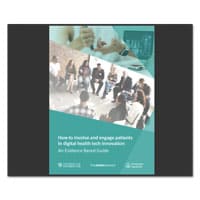
The pandemic forced the NHS to adapt. Digital solutions became a key component in this transformation and while there were successes, the speed of innovation highlighted significant obstacles to adoption of innovative technologies in the NHS. Boehringer Ingelheim set out to uncover the reasons behind this in the 2020 report, an Innovators Guide to the NHS. Through this multi-stakeholder initiative, a number of issues were revealed, eg clinician scepticism, data privacy concerns, innovators struggling to navigate NHS procurement. One of the most important insights was that innovations are not often developed with patients. Further research established that while there was general information on patient engagement, there was nothing specific in the form of a practical guide on how to develop digital health technologies with patients. As a result, Boehringer Ingelheim established a partnership with the Academic Health Science Network (AHSN) and University of Plymouth to produce a first of its kind ‘How to’ Innovator's resource on innovating with patients. The aim of A Digital Innovation Guide to patient involvement and engagement (the Guide) is to expedite digital transformation and contribute to the development of an innovation rich, sustainable healthcare ecosystem and improve patient outcomes by delivering higher quality, digitallyenabled care.
Judges’ comments
This work goes to the heart of the challenge and showed what innovation is. The team identified that useful innovations are not being adopted within the NHS and therefore a practical solution needed to be co-created to support innovators and the NHS system to make adoption an easier process. The laser-like focus of this programme was based on the simple but fundamental insight that in order to innovate for patients you need to do it with them and not for them. The scale of the partnership and stakeholder involvement in this work was extraordinary. We were impressed that this was a purpose-driven piece of work focused on what patients need rather than aligning to a therapy area interest.