Finalist
Addressing Factors Underlying Poor Patient Adherence through Personalised Nurse-Support
Summary of work
Poor adherence to recombinant human growth hormone (r-hGH) treatment presents a significant barrier to achieving optimal growth outcomes. Identifying and addressing factors driving adherence-related behaviours in children prescribed r-hGH treatment is essential to drive optimal clinical health outcomes.
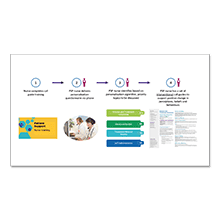
The Merck TUITEK® patient support programme was developed in collaboration with Atlantis Health on a platform of behavioural change modelling. The behavioural science methodology identified four key factors influencing adherence amongst caregivers and patients with growth hormone deficiency.
Through personalised nurse-support focusing on the priority topics that mattered to the individual caregiver, TUITEK demonstrated statistically significant improvements in caregiver perceptions across all four key behavioural factors. The results showed an improvement of disease and treatment coherence in 100% of caregivers, a reduced emotional burden in 37% of caregivers, a reduction of treatment-related anxiety in 52% of caregivers and an improved self-administration of 57%.
Findings indicate that the TUITEK patient support programme can address and positively impact disease and treatment-related adherence barriers amongst caregivers, which has the potential to positively impact poor clinical outcomes and the economic burden associated with poor adherence.
The programme, initially conducted in Taiwan, is currently being expanded globally and is being developed in additional digital formats.
Judges’ comments
This entry from Merck and Atlantis Health is a well-designed and delivered programme that produced some good results. The judges were impressed by how the implementation and outcomes clearly linked back to the three core pillars, and thought the pilot demonstrated the thoughtfulness around personalisation that is needed to achieve success.